How Smaller Sized Memory Care Homes Enhance Engagement and Daily Living
Business Name: BeeHive Homes of Helena
Address: 9 Bumblebee Ct, Helena, MT 59601
Phone: (406) 457-0092
BeeHive Homes of Helena
With so many exceptional years of experience, the caretakers at Beehive Homes have been providing compassionate and personalized care for aging loved ones. Beehive Homes distinguishes itself through a higher level of assisted living licensed care (categories A, B, and C) that allows our residents to make the most of their golden years. Our skilled nurses provide adult residential living, memory care, hospice, and respite services to build and maintain a fulfilling and safe atmosphere for retirees. So please give us a call to schedule a free assessment, or visit our website to learn more about what Beehive Homes can do to ensure that your loved ones are given the best possible home.
9 Bumblebee Ct, Helena, MT 59601
Business Hours
Families usually begin taking a look at memory care when something specific breaks down in the house. A range left on. Medications skipped or doubled. A front door opened at 3 a.m. Without any awareness of danger.
The top places people tend to tour are big assisted living communities, because they show up, greatly marketed, and frequently located on primary roadways. Those buildings can be lovely, but many families walk out thinking, "This seems like a hotel, not a home." When an individual is living with dementia, that distinction matters even more than the décor.
Over the last decade, I have viewed a various design silently prove itself: little memory care homes tucked into residential neighborhoods, frequently accredited as assisted living or similar residential care. Typically 6 to 16 homeowners, one cooking area, a little backyard, staff who understand every household by name.
These smaller sized homes are not automatically much better than every large neighborhood, however they do have structural benefits for engagement, security, and everyday lifestyle. The scale of the environment alters how people with dementia associate with their environments, to personnel, and to each other.
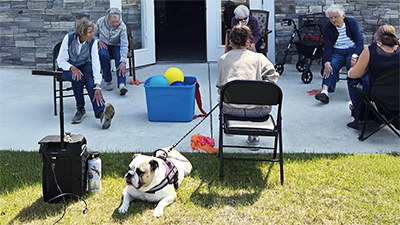
This short article looks carefully at how those smaller sized settings can enhance day-to-day living, when they are an excellent fit, and what trade offs households need to expect compared to larger senior care options.
Why scale matters a lot in dementia care
Dementia slowly narrows a person's capability to filter details. Sound, motion, visual clutter, even strong patterns in carpet and wallpaper can end up being complicated or overwhelming. What feels "dynamic" to a healthy adult can feel disorderly to someone with mid stage dementia.
In a huge assisted living or memory care wing, numerous aspects assemble:
Residents often stroll long hallways that look similar in every direction.
Dining rooms may serve 30 to 60 people at a time. Activities take on overhead announcements, tvs, visitors, and passing staff.For someone who has difficulty processing stimuli, that volume of input can result in withdrawal, agitation, or "exit looking for" behavior. I have actually seen locals in large communities invest the majority of their day parked in a corridor chair, partially due to the fact that the environment itself is too complicated to navigate.
In a smaller sized memory care home, the environment is streamlined without feeling institutional. There is generally one main living-room, often noticeable from the table and kitchen. Staff and citizens share the same areas, so there are fewer unknowns and less choices needed simply to get through the morning.
That shift in scale changes what ends up being possible.
The feel of home and why it influences engagement
Familiarity is not a soft, nostalgic concept in dementia care. It is a practical tool. When the brain loses short term memory and complex thinking, it leans more heavily on deeply ingrained patterns: the shape of a kitchen, the noise of meals, the ritual of making coffee or folding towels.
Smaller memory care homes can take advantage of those patterns in practical ways.
I remember a female I will call Marie, a previous elementary school instructor who had lived alone after her spouse died. She went into a large community initially, with a well appointed memory care system. Within two weeks, she had stopped changing clothing frequently and resisted going to the big dining room. Her chart began to show "refusals," and personnel gently suggested an antidepressant.
Her daughter moved her to a 10 bed home in a close-by area. The very first morning there, staff welcomed Marie to "assist set up for breakfast." They handed her a stack of napkins and basic place mats. She required no guidelines. Within minutes she was humming to herself, laying out the table just as she had actually done for years with her own household and trainees. That small act, in a home design dining room, offered her a function instead of a passive seat at a dining establishment size table.
In a smaller sized setting, engagement typically comes from this type of ingrained chance, not only from scheduled activities. When staff can see and respond to tiny openings for participation, you get:
Quieter early mornings with natural discussion instead of yelled directions,
More movement without formal "workout class," Meaningful tasks that feel like reality, not recreation.The physical scale of the home supports that. An employee in the kitchen can easily discover that a resident is roaming with restless energy and reroute it into drying meals, watering patio area plants, or sweeping a little walkway.
Large structures can imitate home like elements, but an authentic home sized space eliminates much of the artifice. Homeowners do not need to interpret an activity calendar or long passages to find something to do. Life is happening right around them, and they can step into it.
Staffing patterns and relationships in smaller homes
The staffing design is where small memory care homes often diverge most dramatically from traditional assisted living.
In a huge neighborhood, caretakers are typically appointed to numerous citizens across multiple corridors. Dietary personnel run the kitchen. Activities personnel lead programs. Housekeeping personnel clean rooms. That specialization has advantages, yet it can fragment relationships. Citizens may see a dozen faces in a single afternoon, none of whom feel like "my person."
In a smaller sized home, the very same staff normally use numerous hats. The caregiver who helps with bathing in the early morning might also sit at the table throughout lunch, load the dishwashing machine, then lead an easy music activity later. That connection has a few effective impacts:
Families can reach the exact same familiar team member to ask, "How did Mom actually do this week?" rather of hearing from whoever happens to be on duty.
Personnel notice subtle modifications early, such as a slight shift in gait, brand-new confusion at sunset, or a decline in appetite. Citizens experience fewer complete strangers touching them, which decreases stress and anxiety during intimate care like bathing or toileting.I typically inform families to listen for how personnel talk about citizens. In a little home, you are most likely to hear, "This is Mr. Jones. He likes his coffee strong and enjoys talking about his years in the Navy." In a big setting, the language can wander towards task based shorthand such as "She's a two person transfer, needs complete help."
Neither description is destructive. It is a reflection of scale and workflow. But for somebody living with dementia, being referred to as an entire person is not just mentally soothing, it directly improves care.
When personnel understand histories closely, they can utilize that knowledge to defuse agitation and develop engagement. A caretaker who bears in mind that Mrs. Singh utilized to run a clothes shop can invite her to assist pick clothing or fold scarves. That sort of individual centered engagement is easier to provide when 8 to 12 locals share a group of consistent caregivers.
Daily rhythm in a smaller sized memory care home
The rhythm of the day typically informs you more about a memory care setting than any brochure.
In big assisted living or senior care communities, schedules tend to revolve around building wide systems: meal shipment to dozens of citizens, group activity calendars, transport schedules, and staffing shift changes. The result is that residents must fit their lives around those systems.
In a small memory care home, personnel can flex the schedule around the locals. Breakfast may take place in waves for early birds and later sleepers. If three citizens consistently take a snooze best after lunch, staff can change care jobs so those hours stay secured. You see fewer homeowners lined up in wheelchairs waiting for meals or showers, due to the fact that there is simply less institutional machinery to feed.
One 8 bed home I dealt with kept a basic white boards in the kitchen with each resident's favored wake time, bathing pattern, and "finest time of day." Staff checked it as naturally as a grocery list. That board prevented a well implying caregiver from waking a night owl at 6:30 a.m. "to get a head start on the day," which could otherwise set off a cycle of fatigue and agitation.
The home's little size also made flexible activities possible. When a resident with frontotemporal dementia ended up being uneasy and loud throughout afternoons, personnel could move a light treat and a walk into an earlier time, then use peaceful one to one time with headphones and familiar music during his most agitated hours. That personal modification would be far harder in a building where one activities planner is accountable for 50 residents.
Rhythm affects engagement in both instructions. A calm, foreseeable circulation of the day makes it much easier for residents to participate. In turn, engaged locals are less most likely to experience behavioral spikes that interfere with that stability.
Safety, roaming, and flexibility of movement
Families typically assume that a bigger, more protected memory care unit will be much safer. The reasoning appears straightforward: more personnel, more cameras, more regulated access. The truth is subtler.
People with dementia require both security and autonomy. Too much limitation, and they lose muscle strength, balance, and the sense that they have any control over their day. Too much flexibility in an environment they can not interpret, and they get lost, fall, or exit the structure without comprehending the risk.
Smaller homes typically strike a practical balance. The physical footprint is much easier to browse: a short corridor, a noticeable living room, kitchen area in the center, outdoor area just beyond glass doors. For citizens who like to pace, staff can watch on them practically continuously without resorting to alarms or locked interior doors.
I remember a gentleman who had been identified a "serious elopement danger" at his prior big community. There, he repeatedly attempted to leave through the busy front lobby, often when visitors were arriving. He was moved to a 12 resident memory care home with a fenced yard and circular walking path. Because home, staff merely opened the back door. He could walk loops outdoors for long stretches, return inside when ready, and seldom approached the front door at all. His "elopement threat" ended up being an easy requirement to walk with function in an environment that made sense to him.
This is not to say smaller sized homes are always safer. The design relies heavily on mindful personnel who comprehend dementia care. If staffing is thin, a single caretaker might still have a hard time to supervise kitchen tools, hot liquids, and outside areas. For that reason, families ought to not presume that "little" equates to "protected" without asking direct questions about staffing ratios, training, and nighttime coverage.
Still, when done well, the design and exposure of a smaller sized home can offer both much safer wandering and more typical liberty of motion than numerous bigger facilities are able to offer.
Emotional climate and social dynamics
The social material of a memory care home can either strengthen identity or erode it. In a large neighborhood, the sheer variety of locals can create inner circles, confidential clusters of individuals sitting together without actually connecting, or a revolving door of neighbors as people move in and out.
In a smaller sized setting, the group tends to support. 10 or twelve people, with a mix of cognitive and physical capabilities, become familiar faces very rapidly. While not everybody ends up being buddies, residents do recognize "their people."
I have actually seen a peaceful sense of shared seeing develop in these homes. One lady in early stage dementia would carefully remind her neighbor with more advanced illness to complete her soup or hold the hand rails en route to the restroom. She could do this respectfully because they shared practically every meal and lots of hours in the very same living-room. That continuity developed chances for natural peer support that structured "pal systems" typically stop working to achieve.
The other side is that an unfavorable dynamic can also take stronger hold in a small setting. A resident who is extremely loud, physically aggressive, or susceptible to inappropriate remarks can affect the whole house, whereas a large building might have more choices to separate or reroute that person.
This is among the trade offs families should weigh. Smaller sized memory care homes often feel more intimate and mentally grounded, but they also have less ability to "conceal" challenging habits. The key concern to ask potential homes is how they manage those scenarios: Do they have access to mental health or dementia professionals? How do they support personnel emotionally? What criteria lead them to ask a resident to transfer to a greater level of care?
Medical care, therapies, and advanced needs
From a strictly medical perspective, small memory care homes and larger assisted living or senior care communities deal with comparable constraints. Neither is a hospital. Neither can change knowledgeable nursing when a resident requirements extensive wound care, complex feeding tubes, or constant medical monitoring.
Where the distinction frequently shows up is in how doctor communicate with the setting.
Physicians, nurse specialists, physical therapists, and hospice service providers visiting a small home regularly see the very same residents each time and come to know the personnel well. Communication lines shorten. When personnel report, "She has been more sleepy and less thinking about food for 3 days," a service provider can trust that observation as part of an ongoing relationship.
In huge structures, supplier visits can feel more like medical rounds. Notes are left in electronic systems, messages travel through multiple hands, and subtle patterns may be more difficult to spot amid the volume of data.
That said, bigger communities respite care beehivehomes.com frequently have more robust in home offerings: onsite clinics, regular treatment days, group exercise led by qualified instructors, and transportation to specialist appointments. Small homes usually rely on outdoors suppliers who enter the home or households who set up transport individually.
Families must plan ahead about most likely trajectories. A person in early or mid phase dementia who is otherwise relatively healthy can often do extremely well in a small home for many years. Somebody with innovative heart failure, unchecked diabetes, or a history of regular hospitalizations might eventually need the more powerful clinical infrastructure of a knowledgeable nursing center, regardless of cognitive status.
Smaller homes regularly partner with hospice or home health companies to bridge part of this space. Hospice, in specific, can layer symptom management, nursing oversight, and family assistance on top of the everyday caregiving the home provides.
Cost, policies, and what families need to ask
Cost comparisons in between small memory care homes and big assisted living communities differ widely by area, however a couple of patterns recur.
Per month, lots of small homes fall in the very same general variety as devoted memory care systems within bigger structures. They might be somewhat more or a little less expensive, depending upon local realty and staffing markets. What modifications more significantly is how the charge structure is built.
Some little homes utilize an "all inclusive" rate that covers space, board, and standard support with personal care. Others charge a base rate plus tiered care charges as requirements increase. Larger communities typically lean greatly on tiered structures, where the preliminary price appears lower until households recognize that nearly every type of dementia care, from medication management to incontinence support, triggers an additional fee.
Regulatory frameworks likewise vary. Many little memory care homes operate under assisted living or residential care policies, which can vary from state to state. In some regions, this allows an extremely home like environment with strong flexibility. In others, it can indicate less mandated staffing requirements or less regular examinations than big facilities face.
Families should not assume that every small home fulfills the exact same professional standards. The intimacy of the setting can hide both quality and overlook. Careful questions matter more than marketing language.
A short, focused checklist of questions can assist during tours:
-
Staffing and training
Inquire about personnel to resident ratios for days, evenings, and nights, and the number of personnel on each shift are totally trained in dementia care, not just "oriented" to the house. -
Daily life and engagement
Demand particular examples of how residents with different abilities spend their mornings and afternoons, consisting of how the home includes those who no longer join group activities but are still awake and alert. -
Medical coordination and emergencies
Learn which doctors or nurse practitioners follow residents, how often they visit, and what happens if a resident's condition modifications all of a sudden throughout the night or on a weekend. -
Family communication
Ask how and when personnel contact families about regular updates, small issues, and major events, and whether there is a single primary contact for your enjoyed one.
-
Limits of care
Clarify what modifications would prompt the home to suggest transfer to a greater level of care, such as duplicated hospitalizations, aggressive behaviors, or innovative medical equipment.
Listening to how personnel answer these concerns will inform you as much as the material itself. Look for concrete examples over vague assurances.
When a smaller memory care home is the best fit
No single design suits every person with dementia. Still, there are patterns in who tends to thrive in smaller sized homes.
People who lived in modest homes and worth personal privacy and regular typically settle more quickly than in resort design senior care environments. Those who end up being overwhelmed by noise or crowds usually take advantage of the calmer scale. People who take pleasure in easy, hands on tasks like assisting in the kitchen area, folding laundry, or tending a little garden can discover everyday purpose more quickly when the home's size makes those activities noticeable and accessible.
Small homes can likewise be a mild transition for households who have been providing care themselves and are wrestling with guilt. Instead of moving a relative into a large, unfamiliar complex, they are welcoming them into another home, with an odor of real cooking and the noise of a tv in the background. That psychological bridge matters, both for the person with dementia and for the household's long term relationship with the care team.
At the same time, there are circumstances where a larger community or various level of dementia care may be much better:
A person who yearns for regular outings, big group socialization, and high energy occasions may feel bored in a quiet home setting.
Somebody with high acuity medical needs might require on website nursing that the majority of small homes can not provide.Families who prepare for needing short-term coverage for minimal periods may prefer bigger communities that explicitly promote respite care options.
The crucial action is to match the environment to the person's history, personality, and existing stage of dementia, rather than to a generic concept of "the very best" senior care.
Final thoughts for households weighing their options
Choosing memory care is seldom a theoretical workout. It happens after a fall, a wandering occurrence, or months of exhausted caregiving. Feelings run high, and the market's shiny marketing can be confusing.
It assists to walk into each setting with a clear sense of what you are trying to find: not just safety, but everyday engagement, human connection, and a rhythm of life that appreciates who your loved one has constantly been. Smaller memory care homes can master those locations exactly due to the fact that their size restricts how institutional they can become.
Look past the furniture and paint colors. See how staff speak to residents, and how locals respond. Notification whether life seems to stream naturally, with little moments of purpose spread through the day, or whether people mainly sit awaiting the next scheduled activity or meal.
Whether you select a small home, a larger assisted living community with a devoted memory care unit, or a mix of respite care and in home assistance along the method, the objective is the very same: an every day life that feels easy to understand, safe, and silently meaningful to the individual living it.
BeeHive Homes of Helena provides assisted living care
BeeHive Homes of Helena provides memory care services
BeeHive Homes of Helena provides respite care services
BeeHive Homes of Helena supports assistance with bathing and grooming
BeeHive Homes of Helena offers private bedrooms with private bathrooms
BeeHive Homes of Helena provides medication monitoring and documentation
BeeHive Homes of Helena serves dietitian-approved meals
BeeHive Homes of Helena provides housekeeping services
BeeHive Homes of Helena provides laundry services
BeeHive Homes of Helena offers community dining and social engagement activities
BeeHive Homes of Helena features life enrichment activities
BeeHive Homes of Helena supports personal care assistance during meals and daily routines
BeeHive Homes of Helena promotes frequent physical and mental exercise opportunities
BeeHive Homes of Helena provides a home-like residential environment
BeeHive Homes of Helena creates customized care plans as residents’ needs change
BeeHive Homes of Helena assesses individual resident care needs
BeeHive Homes of Helena accepts private pay and long-term care insurance
BeeHive Homes of Helena assists qualified veterans with Aid and Attendance benefits
BeeHive Homes of Helena encourages meaningful resident-to-staff relationships
BeeHive Homes of Helena delivers compassionate, attentive senior care focused on dignity and comfort
BeeHive Homes of Helena has a phone number of (406) 457-0092
BeeHive Homes of Helena has an address of 9 Bumblebee Ct, Helena, MT 59601
BeeHive Homes of Helena has a website https://beehivehomes.com/locations/helena/
BeeHive Homes of Helena has Google Maps listing https://maps.app.goo.gl/YUw7QR1bhH7uBXRh7
BeeHive Homes of Helena has Facebook page https://www.facebook.com/beehivehelena/
BeeHive Homes of Helena has an YouTube page https://www.youtube.com/user/BeeHiveCare
BeeHive Homes of Helena won Top Assisted Living Homes 2025
BeeHive Homes of Helena earned Best Customer Service Award 2024
BeeHive Homes of Helena placed 1st for Senior Living Communities 2025
People Also Ask about BeeHive Homes of Helena
What is BeeHive Homes of Helena Living monthly room rate?
The rate depends on the level of care that is needed. We do an initial evaluation for each potential resident to determine the level of care needed. The monthly rate is based on this evaluation. There are no hidden costs or fees
Can residents stay in BeeHive Homes until the end of their life?
Usually yes. There are exceptions, such as when there are safety issues with the resident, or they need 24 hour skilled nursing services
Do we have a nurse on staff?
No, but each BeeHive Home has a consulting Nurse available 24 – 7. if nursing services are needed, a doctor can order home health to come into the home
What are BeeHive Homes’ visiting hours?
Visiting hours are adjusted to accommodate the families and the resident’s needs… just not too early or too late
Do we have couple’s rooms available?
Yes, each home has rooms designed to accommodate couples. Please ask about the availability of these rooms
Where is BeeHive Homes of Helena located?
BeeHive Homes of Helena is conveniently located at 9 Bumblebee Ct, Helena, MT 59601. You can easily find directions on Google Maps or call at (406) 457-0092 Monday through Sunday Open 24 hours
How can I contact BeeHive Homes of Helena?
You can contact BeeHive Homes of Helena by phone at: (406) 457-0092, visit their website at https://beehivehomes.com/locations/helena/, or connect on social media via Facebook or YouTube
Conveniently located near Beehive Homes of Helena Cinemark Helena a great movie theater with full food & drink menu. Catch a movie and enjoy some great food while you wait.